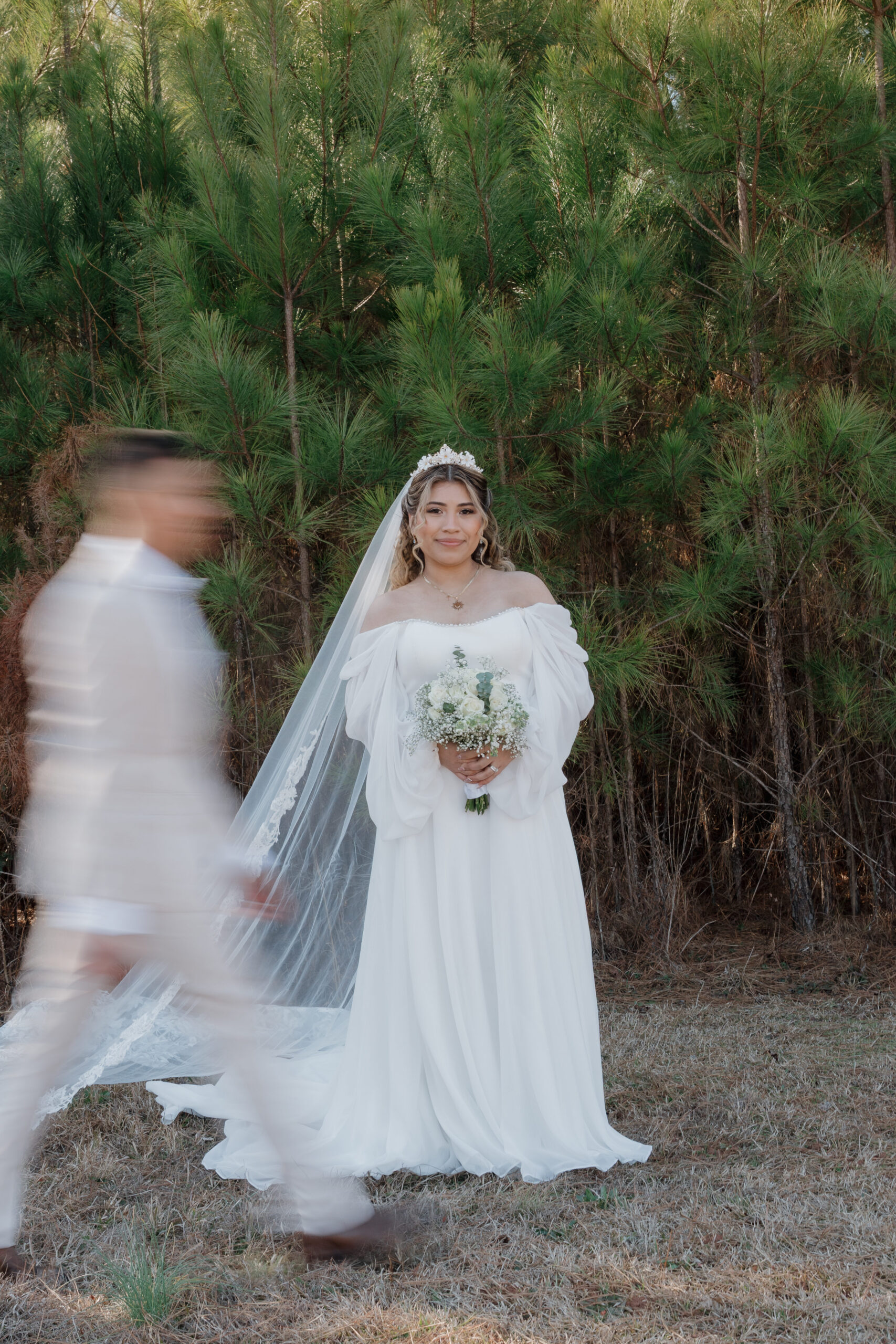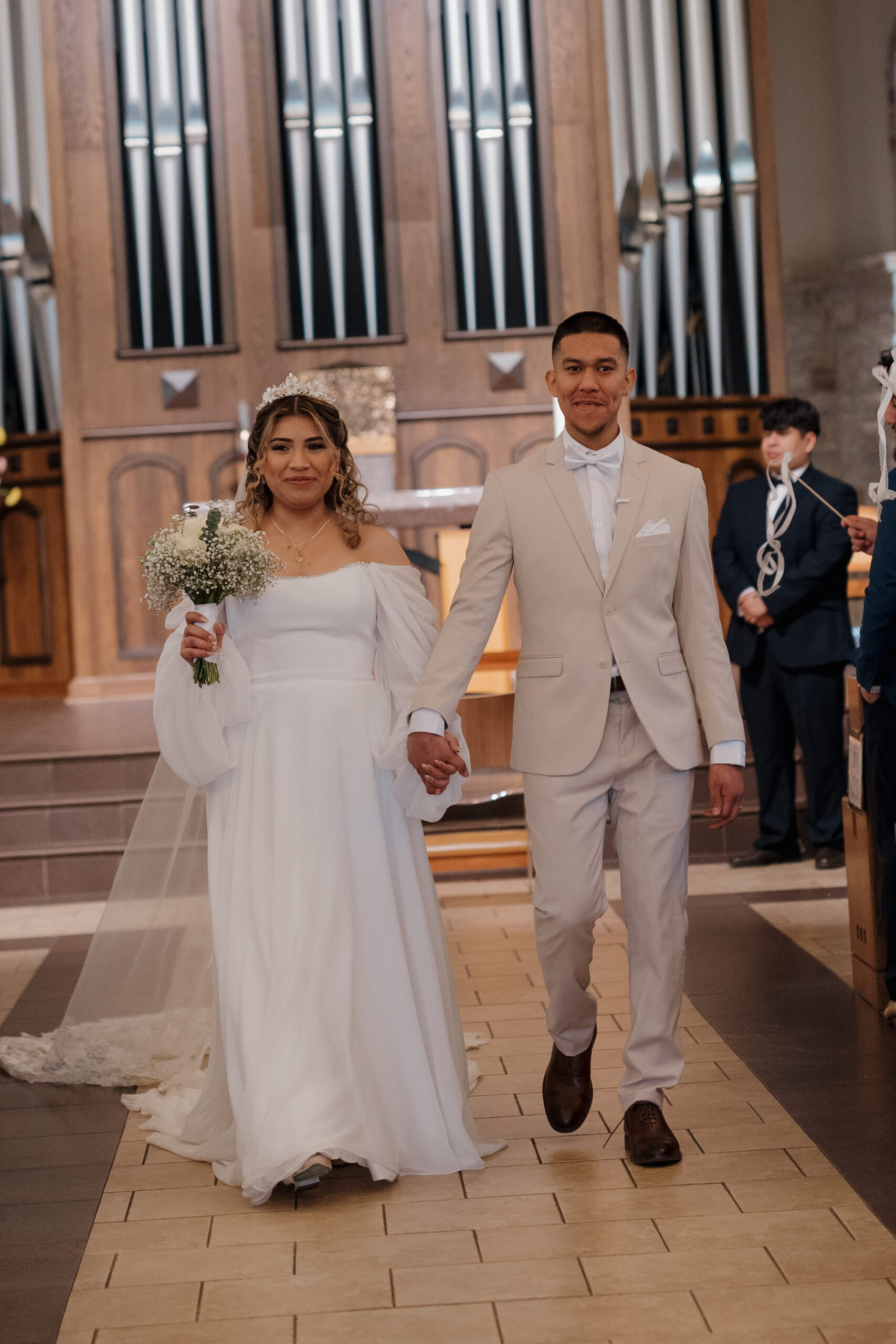
13-Hour Catholic Wedding Timeline: What a Full Wedding Day Really Looks Like
If you’re planning a Catholic wedding, you’ve probably wondered how many hours of wedding photography and videography you actually need. Is 8 enough? 10? What about 13 hours?
This wedding was officially our longest day yet. Thirteen full hours from the moment we started setting up to end-of-night dancing.
We filmed a full behind-the-scenes video for YouTube, but we also wanted to break it down here because understanding the timeline is one of the most important parts of planning a Catholic wedding.
Here’s what a 13-hour Catholic wedding day actually looked like and how it can help you plan yours.
9:30 AM – Catholic Ceremony Arrival
The Catholic ceremony was set for 11:00 AM at Immaculate Heart of Mary Catholic Church | Atlanta, GA.
For a Catholic wedding, especially one in a traditional church, we need at least an hour and a half before the ceremony begins. That time allows us to:
- Set up multiple cameras
- Test audio
- Mic the groom
- Mic the priest
- Adjust for church lighting
- Capture clean, empty ceremony shots
Those empty shots matter more than people realize. Once guests arrive, you cannot recreate that clean altar or aisle again.
Planning Tip for Catholic Brides:
Let your photographer and videographer know exactly what kind of ceremony you are having.
Are you doing a 30-minute ceremony without Mass?
Or a full Catholic Nuptial Mass, which typically runs closer to an hour?
This affects:
- Audio setup
- Camera battery planning
- Memory card usage
- Timeline flow afterward
Catholic ceremonies follow a sacred structure. There is no redo. No second take. The timeline must respect that.
11:00 AM – The Ceremony: Flow Over Chaos
Catholic ceremonies require quiet coordination from vendors. This wedding had around 230 guests invited. Therefore, the church was full. Which means capturing inside the catholic church can get difficult for photo and video. Thats why having an experienced catholic wedding photographer and videographer is super helpful. We are able to capture your day while still respecting the church.
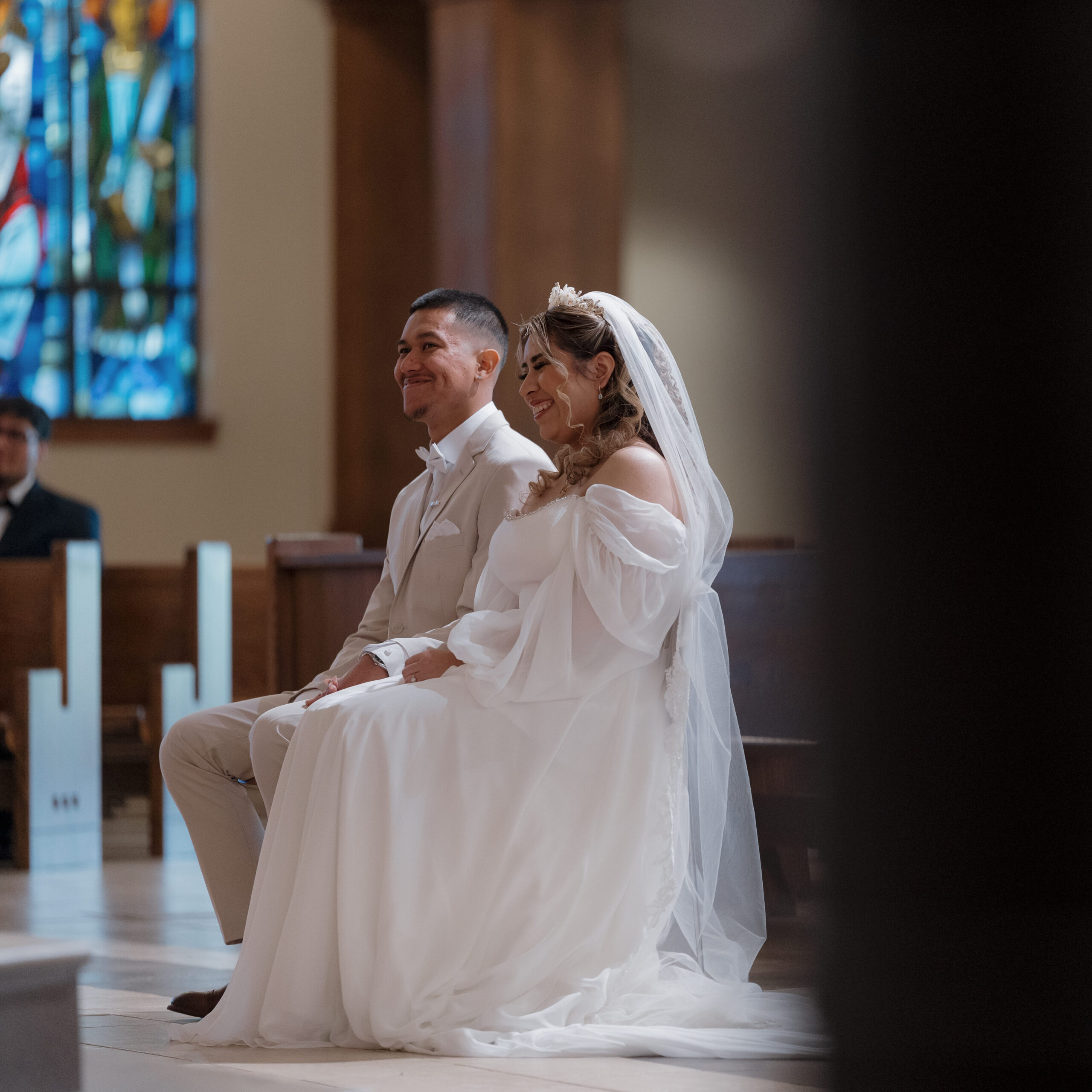
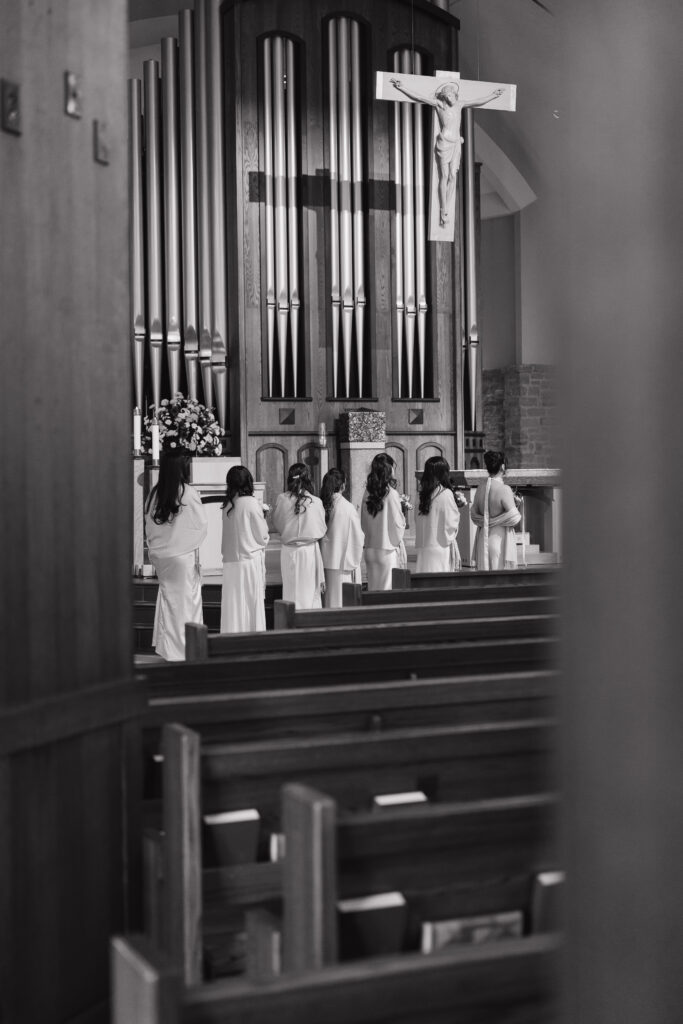
For couples planning, when you hire both your wedding videographer and photographer, ask how they work together during a Catholic Mass. The church setting doesn’t allow for excessive movement. So you want to ensure you book a team that already knows how to move without distraction.
12:00 PM – Family Photos + Church Timing Considerations
Family and Wedding party photos are often the fastest-paced part of a Catholic wedding day.
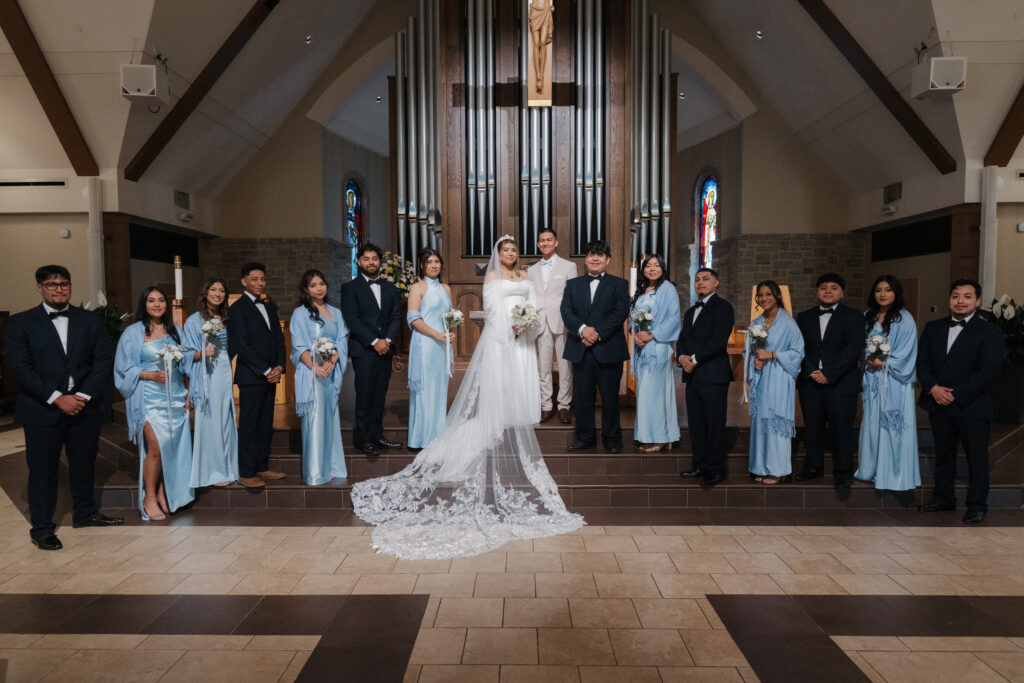
But here’s something many couples don’t realize:
If your wedding is on a Saturday, many Catholic churches schedule afternoon Confession. That can mean you have a limited window for family portraits inside the church.
Planning Tip:
Ask your parish coordinator:
- Is there Confession after the ceremony?
- How long do we have inside the church for photos?
Knowing that in advance allows us to build a realistic family photo timeline and avoid being rushed out unexpectedly.
We moved efficiently through the family list, keeping structure without turning it into a production line. Organization is what keeps this part smooth.
The One-Hour Drive: Buffer Time Matters
After portraits, we packed up and headed to the reception venue.
It was an hour drive away but this is where strong timeline planning makes all the difference.
Try to build buffer time between church and reception, because stress can creep in quickly. Traffic. Parking. Guest confusion. Delayed arrivals.
For Catholic weddings especially, ceremony and reception venues are often separate locations. That travel distance needs breathing room in your timeline.
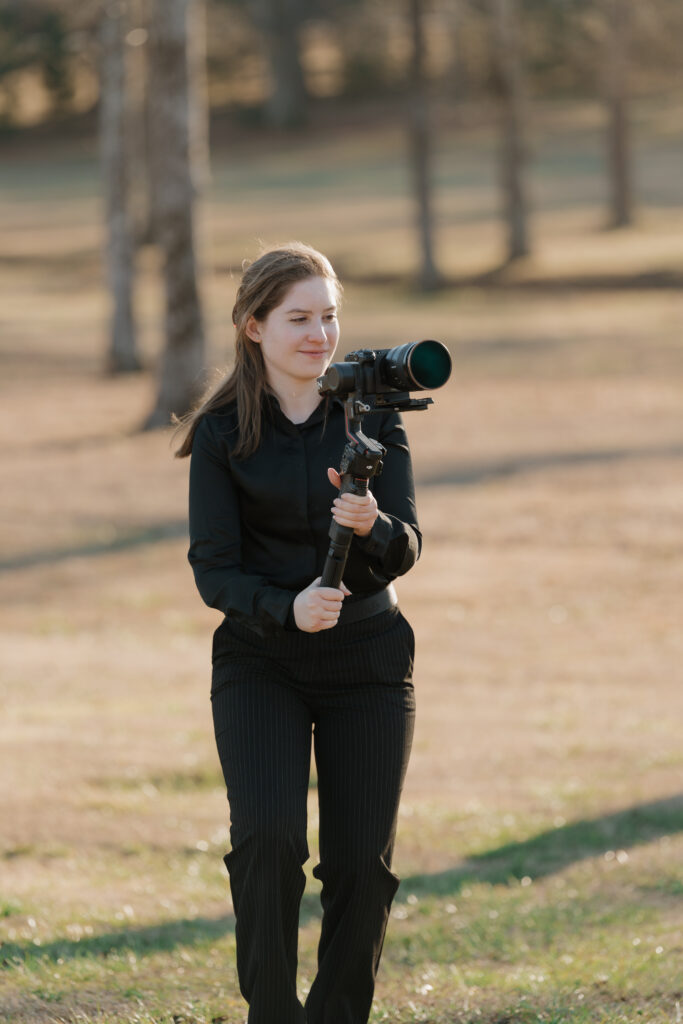
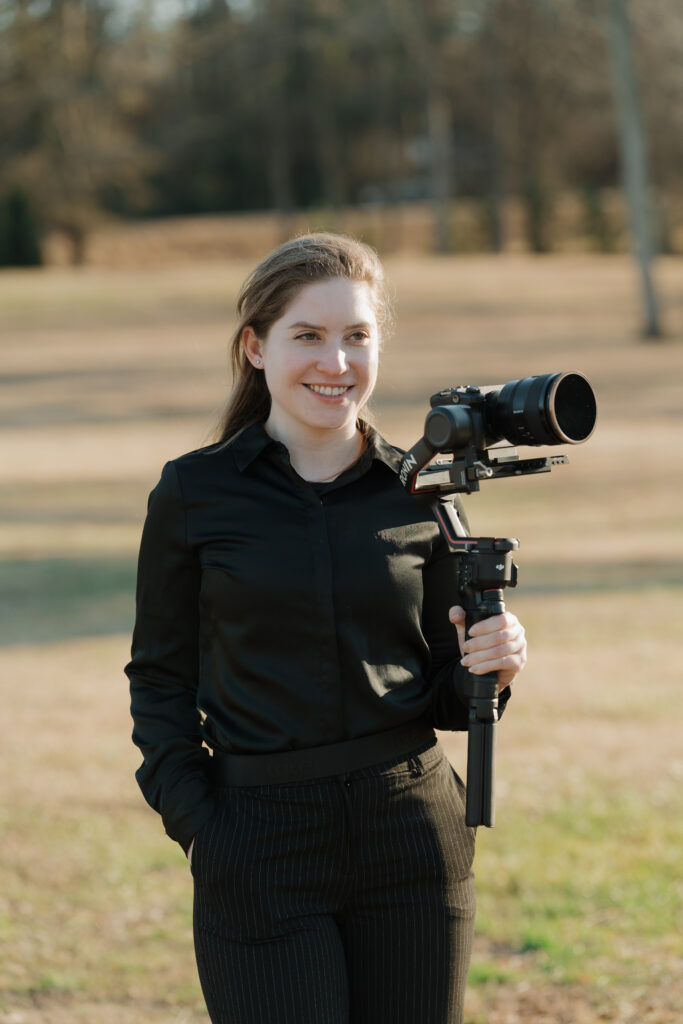
3:00 PM – Reception at Mystic Acres, in Griffin GA
The reception started slightly behind schedule, which is completely normal.
We recalibrated lighting and audio immediately for:
- Bride and Groom Photos at venue
- Wedding Party photos at the venue
- Grand entrances
- First dances
- Toasts and speeches
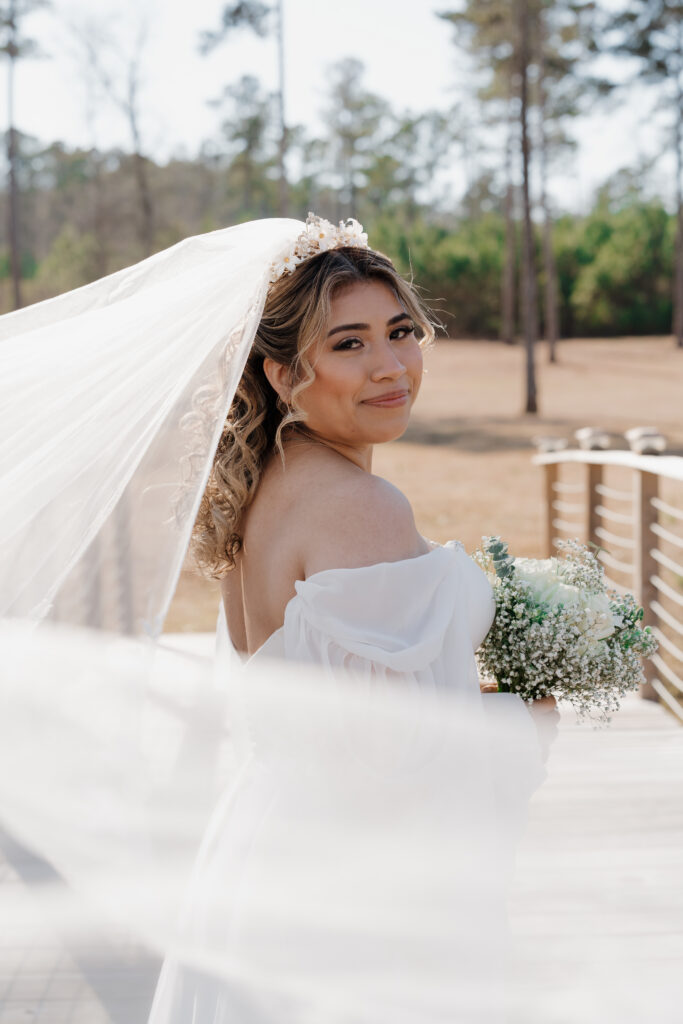
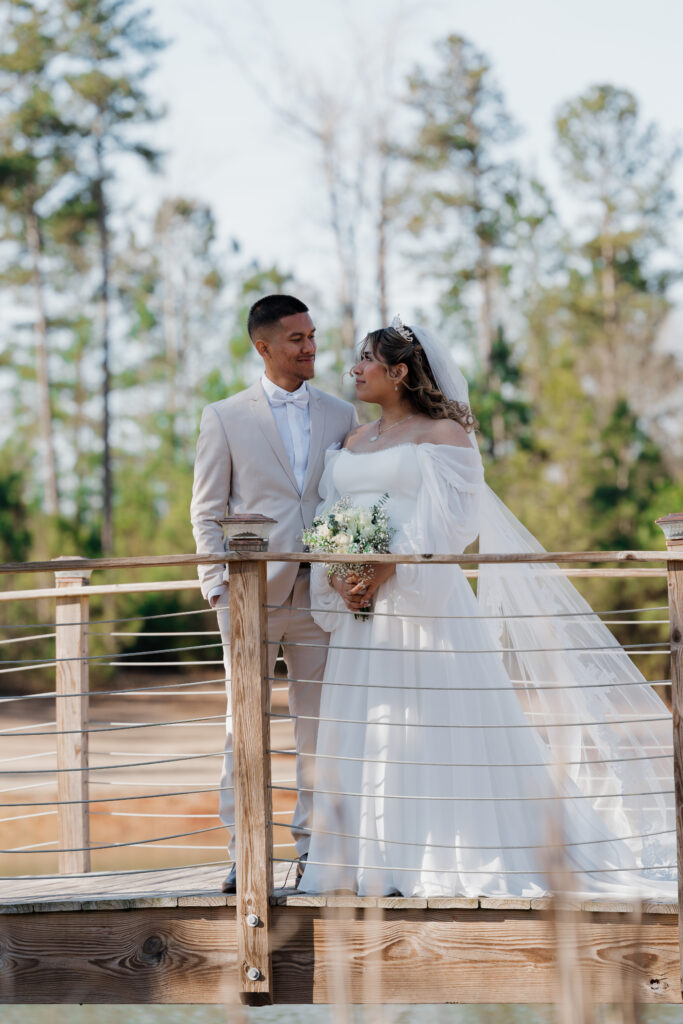
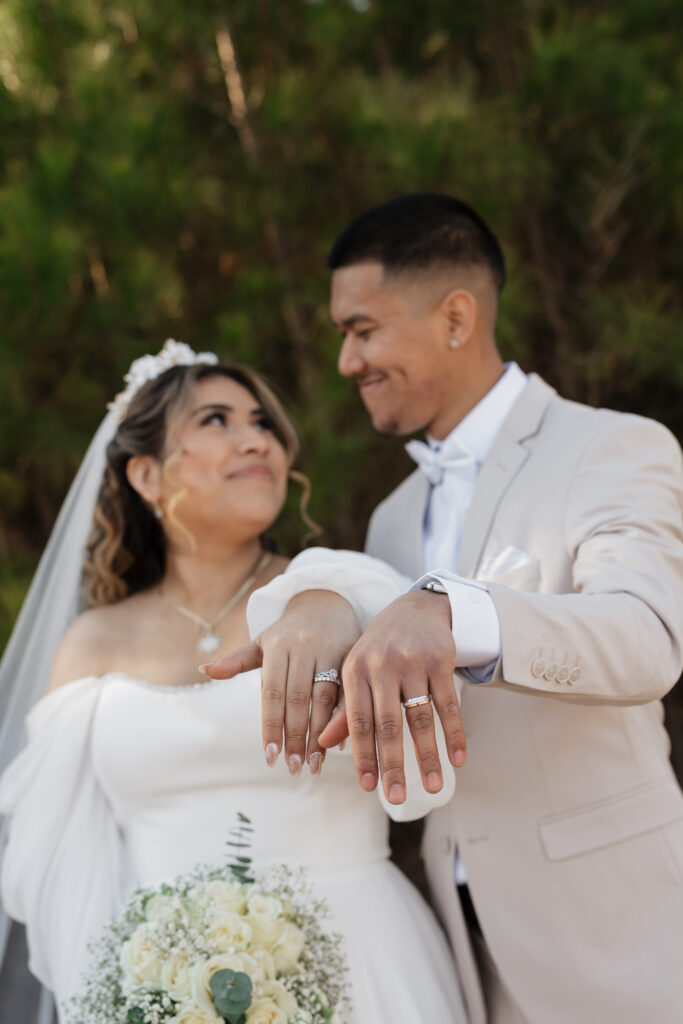
For longer wedding days, formalities are often spaced out instead of happening back to back. That actually helps the flow feel natural rather than rushed.
Planning Tip:
If you’re investing in extended coverage, spreading events out can create a more relaxed experience for you and your guests while still capturing everything fully.
7:00 PM – Open Dancing
By 7:00 PM, the formalities were complete and the timeline pressure lifted.
This is where intentional coverage matters most.
We do not overshoot and try to read the room. We capture different shots to show different energy throughout the night. For example, we tend to mix in slow shutter photography for motion and balance with clean images.
With video, we capture enough to preserve the vibe without repeating the same moments.
Longer coverage doesn’t mean more random footage. It means more room to shoot with purpose.
10:30 PM – Thirteen Hours Later
By the end of the night, we were definitely feeling it. Thirteen hours is a long day.
Once open dancing slowed down, we did a quick final recap on camera, packed up our gear, and started breaking everything down.
Before leaving, we always double check the room for our audio packs, tripods, chargers. It’s very easy to leave something behind at hour thirteen if you’re not paying attention. We know from experience…
We found the bride and groom, said our goodbyes, and made sure they didn’t need anything else from us, and then we headed out.
At that point, the ballroom was clearing out and the night was wrapping up naturally.
Days like this are actually relatively easier and having more time to get our shots, not as much rushing. But they are long, which involves a lot of coordination, and a lot of coverage from start to finish.
Thirteen hours later, everything was captured, packed, and completed.
That’s a complete wedding day. Congratulations to Jessica & Angel.
📸🎥 Ready to plan your own Wedding?
Let’s make it unforgettable! Contact us at The Duo Weddings to learn more about our Wedding Photography & Videography packages.